Chicken Road Strategy 2026:
Betting Systems & How to Win
Chicken Road strategy guide for 2026: why no betting system beats the fixed 98% RTP house edge, plus bankroll tactics and cash-out timing tips to play.
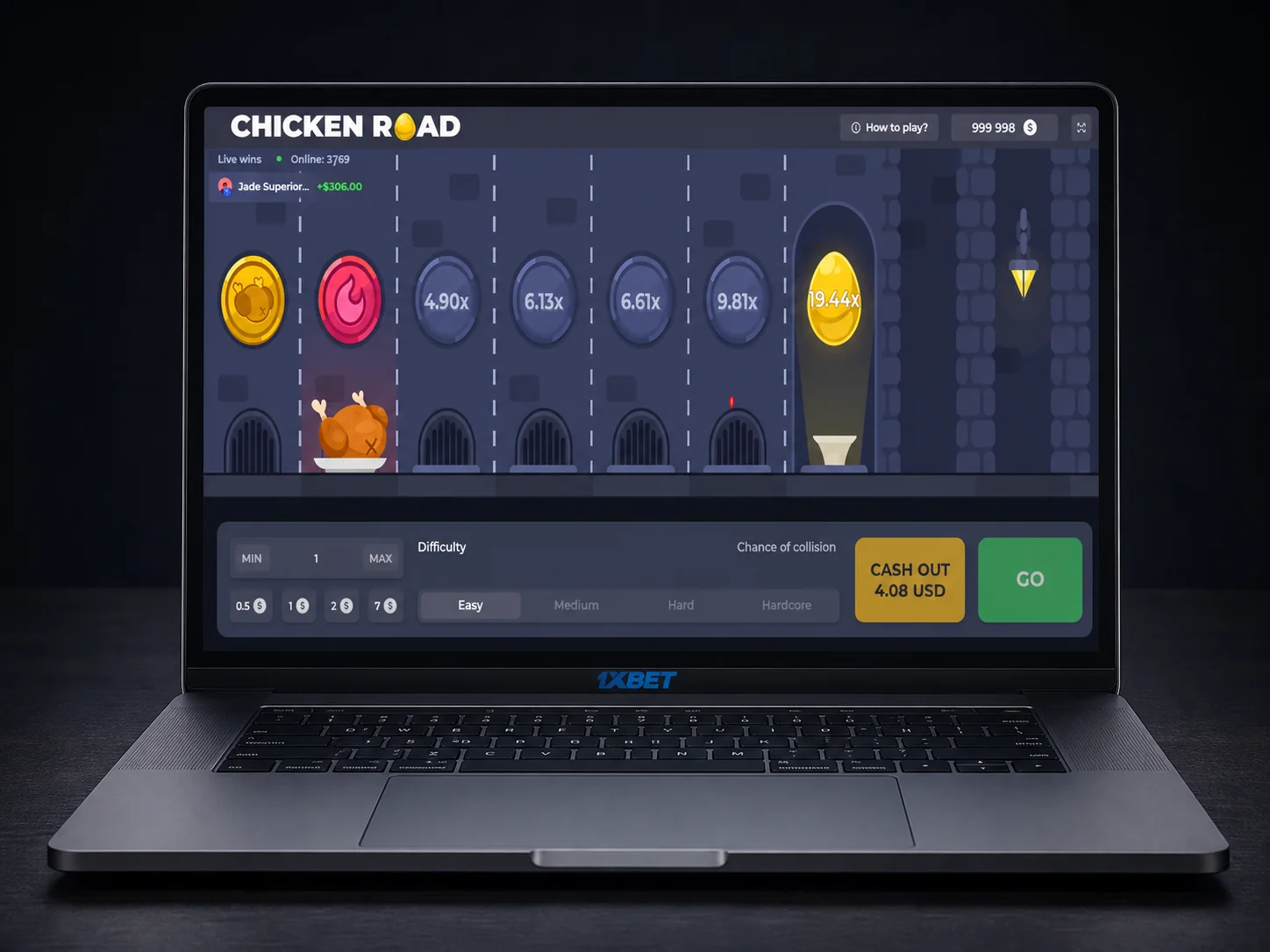

Chicken Road Strategy · 2026
No betting system changes the math behind Chicken Road's 98% RTP. The house edge is fixed at every stake size, on every round, no matter which cash-out target you chase. What strategy actually controls is variance and how long your bankroll survives a session - not whether the game owes you a win. The three approaches below run from cautious to aggressive, paired with bankroll rules built around InOut Games' narrow ₹1-₹2 stake range.
Conservative Strategy (1.20x-1.50x)
This tier locks in small, frequent wins by cashing out the instant the multiplier crosses 1.20x, with a hard ceiling at 1.50x. Every stake stays capped at the game's minimum bet, and three consecutive losses is the trigger to stop for the session rather than push through. It's the right fit for players still learning Chicken Road's pace or clearing a bonus with the shallowest possible variance.
At the ₹1 minimum stake, a ₹50 session bankroll absorbs 50 flat rounds before you're out of stake, which is well beyond most losing streaks at a sub-1.50x target. Because the stake never scales up under this tier, the bankroll math stays simple and predictable from the first round to the last.
Balanced Strategy (1.50x-3.00x)
The balanced tier lets the multiplier run past the easy exits and holds for the 1.50x-3.00x band, trading some win frequency for a larger payout per hit. A firm cashout point set before you bet, not during the round, keeps this tier from drifting into aggressive territory under pressure. Stake increases only follow a win, never a loss, and the last 10 rounds are worth tracking to spot any drift in your own discipline.
Because Chicken Road's stake range tops out at ₹2, scaling up after a win means moving from the ₹1 floor straight to the ₹2 ceiling - there's no room for a gradual ramp. A realistic bankroll here is ₹100, sized to survive stretches where the 1.50x-3.00x band doesn't land for 15-20 rounds in a row.

Chicken Road bet panel - stake selector and cash-out target set before the round starts
Aggressive Strategy (5.00x-20.00x)
Holding for a 5.00x-20.00x multiplier means most rounds end in a loss, and Chicken Road's High volatility rating means variance can wipe a bankroll fast at this tier. Stake sizing should stay a small, fixed fraction of your total bankroll per round, with a hard loss limit set before you ever place a bet. Never chase a missed cash-out with a bigger stake - the temptation to recover a near-miss immediately is exactly how aggressive sessions blow up.
Chicken Road's ceiling runs all the way to a 2,542,251x max win, but a 5x-20x hold is already deep into the low-probability end of that curve, long before the true tail. Only stake what you can afford to lose entirely in this tier, since the gap between a 5x cash-out and a total loss is a single round.
Betting Systems Explained
Every staking system below changes the shape of your variance, never the underlying 98% RTP. Chicken Road's stake range is unusually narrow - just ₹1 to ₹2 - which matters more here than on games with a wide betting range, because progressive systems run out of room to progress almost immediately.
Double your stake after every loss so a single win recovers all prior losses plus a small profit. Best for: short sessions with a strict loss cap.
| Round | Result | Stake |
|---|---|---|
| 1 | Loss | ₹1 |
| 2 | Loss | ₹2 (max bet) |
| 3 | Capped | ₹2 (no room to double) |
Verdict: Chicken Road's ₹2 max bet caps a Martingale sequence after a single loss - there's no room to double past it, so this system loses its core recovery mechanic within two rounds.
Increase your stake by following the Fibonacci sequence after a loss, then step back two positions after any win. Best for: structured recovery without doubling exposure.
| Round | Result | Stake |
|---|---|---|
| 1 | Loss | ₹1 |
| 2 | Loss | ₹1 |
| 3 | Capped | ₹2 (sequence hits max bet) |
Verdict: The sequence hits Chicken Road's stake ceiling by the third step, gentler than Martingale but still limited by how little room the ₹1-₹2 range leaves to work with.
Raise your stake by one unit after a loss and lower it by one unit after a win, smoothing swings gradually. Best for: gradual, low-drama bankroll adjustments.
| Round | Result | Stake |
|---|---|---|
| 1 | Loss | ₹1 |
| 2 | Win | ₹2 |
| 3 | Win | ₹1 |
Verdict: With only one unit of movement between ₹1 and ₹2, D'Alembert effectively becomes a binary toggle on Chicken Road - simple to run, but with limited nuance versus wider-range games.
Stake the exact same amount every round regardless of the previous result, keeping variance from compounding across a session. Best for: steady bankroll tracking.
| Round | Result | Stake |
|---|---|---|
| 1 | Loss | ₹1 |
| 2 | Win | ₹1 |
| 3 | Loss | ₹1 |
Verdict: Flat betting is the cleanest fit for Chicken Road's narrow stake range - no scaling logic to run into a ceiling, just consistent tracking against a fixed session budget.
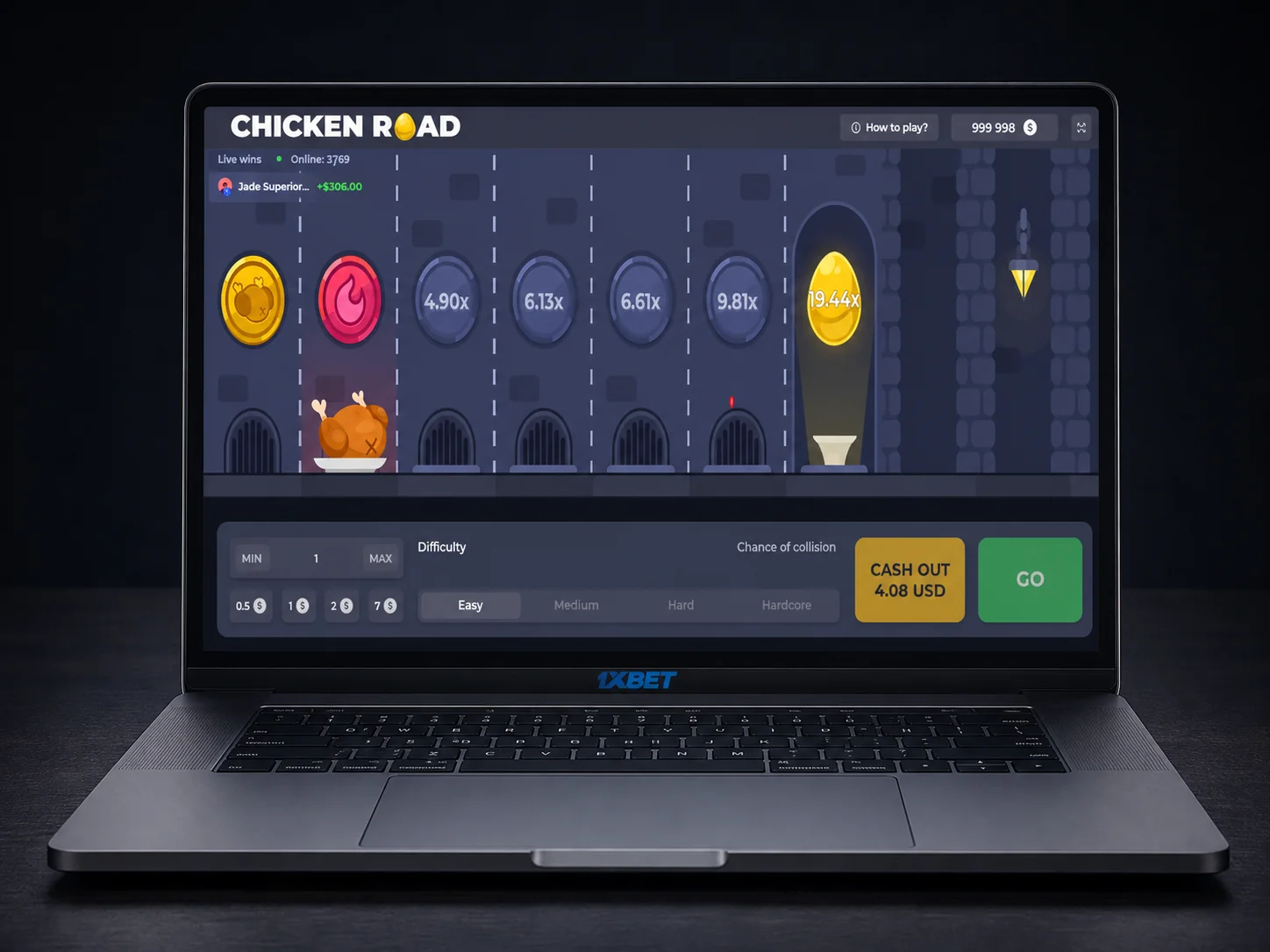
Round history panel - flat-bet sequence tracked against a fixed session budget
Five mistakes that end sessions early
These patterns show up across crash-style games generally, but each one has a specific cost on a 98% RTP, High volatility title like Chicken Road. Each mistake below pairs with a concrete fix rather than abstract advice.
-
1Chasing losses with bigger betsDoubling down after a miss burns through a bankroll in a handful of rounds once volatility runs against you. Fix: set a fixed stake and a session loss cap before you start.
-
2Ignoring the RTP-volatility gapExpecting frequent big multipliers on a 98% RTP high-volatility slot leads to abandoning sessions right before variance turns. Fix: read volatility as a timeline, not a guarantee, and plan for dry spells.
-
3Skipping the demo modeJumping straight into real-money rounds without watching the multiplier's rhythm first means learning the pace at your own expense. Fix: run several dozen free rounds before staking anything real.
-
4No cashout targetHolding for "a bit more" without a preset target turns a solid multiplier into a total loss almost every time. Fix: decide your cashout point before the round starts, not during it.
-
5Playing on unlicensed sitesUnlicensed mirrors can quietly alter payout behavior with no audit trail or recourse if something looks off. Fix: stick to operators that publish their license and RNG certification.
Strategy FAQ
Is there a guaranteed win strategy for Chicken Road? +
No. The house edge is fixed by the game's 98% RTP on every single round, regardless of stake size, cash-out target, or which betting system you follow. Bankroll management extends a session and smooths variance, but it cannot flip the underlying math in your favor.
What's a safe cash-out multiplier on Chicken Road? +
The 1.20x-1.50x conservative band is the closest thing to a "safe" target, since it cashes out early and often rather than holding through more of the round. Nothing removes risk entirely on a High volatility game - it only shrinks the size of each individual swing.
Does my betting pattern affect the RNG outcome? +
No. Each round's outcome is generated independently, so raising or lowering your stake, or switching betting systems mid-session, has zero effect on where the multiplier lands. Believing otherwise is the gambler's fallacy - a run of losses does not make a win "due."
Why doesn't Martingale work well on Chicken Road specifically? +
Chicken Road's stake range runs only from ₹1 to ₹2. Martingale needs to keep doubling after every loss, but it hits the ₹2 max bet after a single loss, cutting off the recovery mechanic the system depends on almost immediately.
How many rounds should I play before judging a strategy? +
A handful of rounds tells you almost nothing on a High volatility game. Run several dozen rounds in demo mode first to learn the pace, then evaluate any real-money system over at least 50-100 rounds before drawing conclusions.